Enroll the names of your deceased loved ones to be remembered at our Masses during the month of November. Click here.
Enroll the names of your deceased loved ones to be remembered at our Masses during the month of November. Click here.
The Miraculous Medal (originally known as the Medal of the Immaculate Conception) is one of those cherished sacramentals given to us directly by Our Blessed Mother herself. In a series of visions, Our Lady provided specific instructions for its design and widespread distribution St. Catherine Labouré. So many conversions and miracles around the world have been attributed to the medal, that it became known simply as “the Miraculous Medal.”
In the year 1830, Our Blessed Mother appeared three separate times to a young novice in the mother house of the Daughters of Charity in Paris France, St. Catherine Labouré. Our Lady requested that a medal be struck in the likeness of her image, and gave very specific details as to the design. After careful investigation into the authenticity of the apparition, St. Catherine’s spiritual director received permission for the first medals to be struck in June 1832. More about the history of the medal can be read here.
While the official name of the medal is “The Medal of the Immaculate Conception,” so many miracles accompanied the wearing of the medal that almost immediately became known as simply “The Miraculous Medal.” In the same year that the first medals were struck, a terrible cholera epidemic ravaged the city of Paris. As soon as the first medals were distributed cures were reported, as well as conversions to the Faith. As devotion to the medal spread, the miraculous stories multiplied. Perhaps the famous is the conversion of a Jew, Alphonse Ratisboone, who had resisted conversion but agreed reluctantly to wear the medal at the insistence of a Catholic friend. Upon entering the Church he saw a vision of the Blessed Mother and was instantly and completely converted, eventually becoming a Priest. Many more stories of conversions, healings, Divine Protection, and other special spiritual graces are recorded in this book.
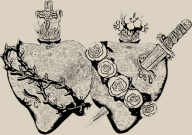
On the front of the Medal is the image of the Blessed Mother standing on the world, with rays of light emitting from her hands. She herself explained that these rays were symbols of the graces that would be bestowed on all who asked for them. Around her figure are the words “O Mary, conceived without sin, pray for us who have recourse to thee.” The identity and vocation of Mary is explicitly revealed to us in this phrase: the Virgin Mary is immaculate from the moment of her conception. This privilege is was bestowed upon her through the merits of the Passion of Jesus Christ, and from it flows the all-powerful nature of her intercession for those who pray to her. On the back of the medal is another symbol that speaks to us of the mission of the Blessed Mother and her union with her Son: “M” is the initial of Mary; the cross is the cross of Christ. The two symbols are interlaced – The “M” supports the cross, as the Redemption and humanity of Christ came from her “Fiat” at the Annunciation. But the “M” also hangs upon the cross, reminding us that even she depended upon her son’s redemptive act, and owed all of Her great privileges to Him. The Sacred and Immaculate Hearts are pictured together, expressing the union between the two and the great love that they have for the world. The 12 stars represent the 12 apostles, as a symbol of the entire Church, called to participate and be united to the redeeming act of the cross, the sacrifice of both Mother and Son. More can be read about the symbolism here.
Yes, Miraculous Medals like all Sacramentals should be blessed by a Priest. If you wish us to have your medal blessed before shipping it, please request this blessing at checkout. While it is not mandatory, there is also a ceremony of enrollment (also performed by the Priest) for those who wish to consecrate themselves to Mary by the wearing of this medal.
Our Blessed Mother specifically asked that the medal be worn about the neck, saying to St. Catherine Labouré: “Have a Medal struck after this model. All who wear it will receive great graces; they should wear it around the neck. Graces will abound for persons who wear it with confidence.” Out of popular devotion, it has also become popular to use the medal as a rosary center or side medal.
Most come in a variety of types of metals to serve a variety of needs and price ranges: assorted base metals, pewter, nickel silver, sterling silver, gold filled and karat gold. The medals are made in the U.S.A or imported from Europe.